
In this guide
Lighting design in Dubai has to solve a problem most climates do not: homes are flooded with hard daylight for half the day and then rely entirely on artificial light from early evening, often behind floor-to-ceiling glass that turns black and reflective after sunset. A good scheme makes the same room feel calm at 9 pm and practical at 7 am, without glare, dark corners or a ceiling dotted with forty identical downlights. This 2026 guide explains the three layers of residential lighting, how to choose colour temperature and fixtures, when DALI or smart control is worth it, how lighting must be coordinated with the false ceiling, and what a lighting scheme costs in AED.
- Plan three layers in every main room — ambient, task and accent — on separate circuits so each can be dimmed on its own.
- Use warm white (2700–3000K) for living and sleeping areas, 3000–3500K for kitchens and bathrooms, and keep it consistent across a room.
- Lighting must be fixed before the false ceiling is closed; late changes mean cutting and re-patching gypsum.
- Indicative 2026 budgets run from about AED 15,000 for a 1-bed upgrade to AED 150,000+ for a fully controlled villa scheme.
01Why lighting design matters more in Dubai homes
Most Dubai apartments and many villas are handed over with a grid of downlights on one or two switches. It works for a site inspection, but it flattens every room: the light comes from directly above, casts shadows under eyes and cabinets, and leaves walls and corners dark. At night, large windows reflect that grid back at you.
A considered scheme changes the feel of a home more per dirham than almost any other upgrade. It also interacts with nearly every other decision: the false ceiling design, joinery, curtain pockets, furniture layout and artwork. That is why lighting is best treated as part of interior design, not something chosen at the electrical shop after the ceiling is closed.
02The three layers of residential lighting
Professional lighting design for homes is built from three layers, each doing a different job:
- Ambient — the general light that lets you move around: cove lighting in a ceiling recess, a few well-spaced downlights, a central pendant or ceiling-washing fixtures. Ideally soft and indirect.
- Task — focused light where you work: under-cabinet strips in the kitchen, vanity lights at face height in the bathroom, reading lights by the bed and sofa, a pendant over the dining table or desk.
- Accent — light that creates depth and mood: wall washers on a feature wall, picture lights, LED in shelving and niches, uplights on plants, step lights on stairs.
The trick is not the number of fixtures but the separation. Each layer on its own circuit — and ideally dimmable — lets one living room have a bright cleaning scene, a dinner scene and a film scene. A room lit only by ambient light looks like an office; a room with only accent light is atmospheric but impractical.
03Colour temperature, CRI and glare
Three technical specs decide whether LED light feels pleasant or cheap. Ask for them on every fixture and lamp:
| Room | Colour temperature | Minimum CRI | Notes |
|---|---|---|---|
| Living and dining | 2700–3000K | 90 | Dimmable; mix cove, pendant and accent |
| Bedrooms | 2700K | 90 | Warm, low-level light; avoid downlights over the pillow |
| Kitchen | 3000–3500K | 90 | Under-cabinet task light is essential |
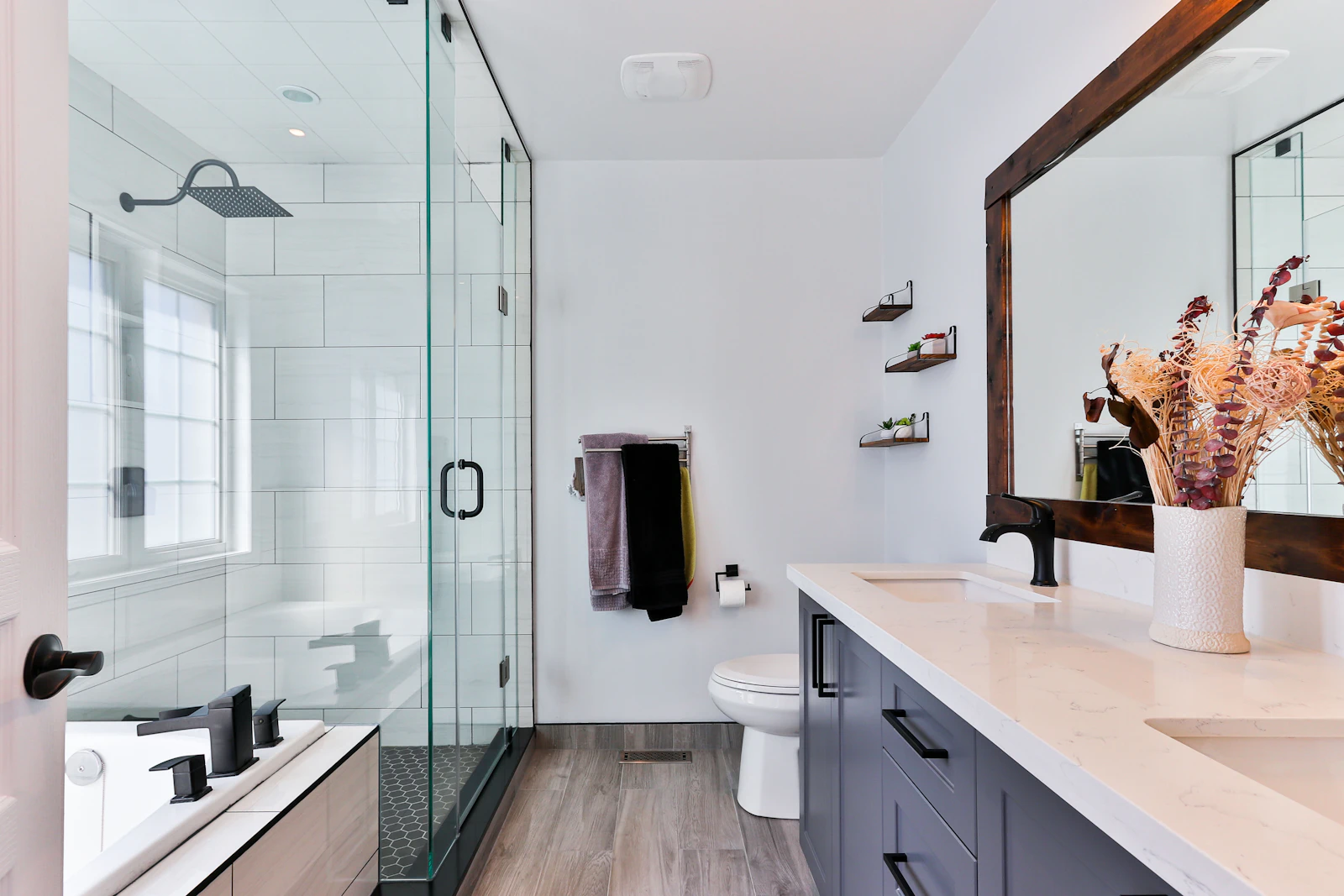
| Bathrooms | 3000K | 90+ | IP-rated fixtures in wet zones; mirror light at face height |
| Study / home office | 3000–4000K | 90 | Glare-free task light, separate from ambient |
| Terrace and garden | 2700–3000K | 80+ | IP65 or higher, UV- and heat-resistant |
CRI (colour rendering index) of 90 or above keeps skin, wood and fabrics looking natural; cheap strips at CRI 80 make marble look grey and food look dull. Glare is controlled with deep-recessed or anti-glare downlights and by not placing fixtures directly over sofas and beds. And keep colour temperature consistent: mixing 3000K coves with 4000K downlights in one space looks like a mistake, because it is.
04Coordinating lighting with the false ceiling
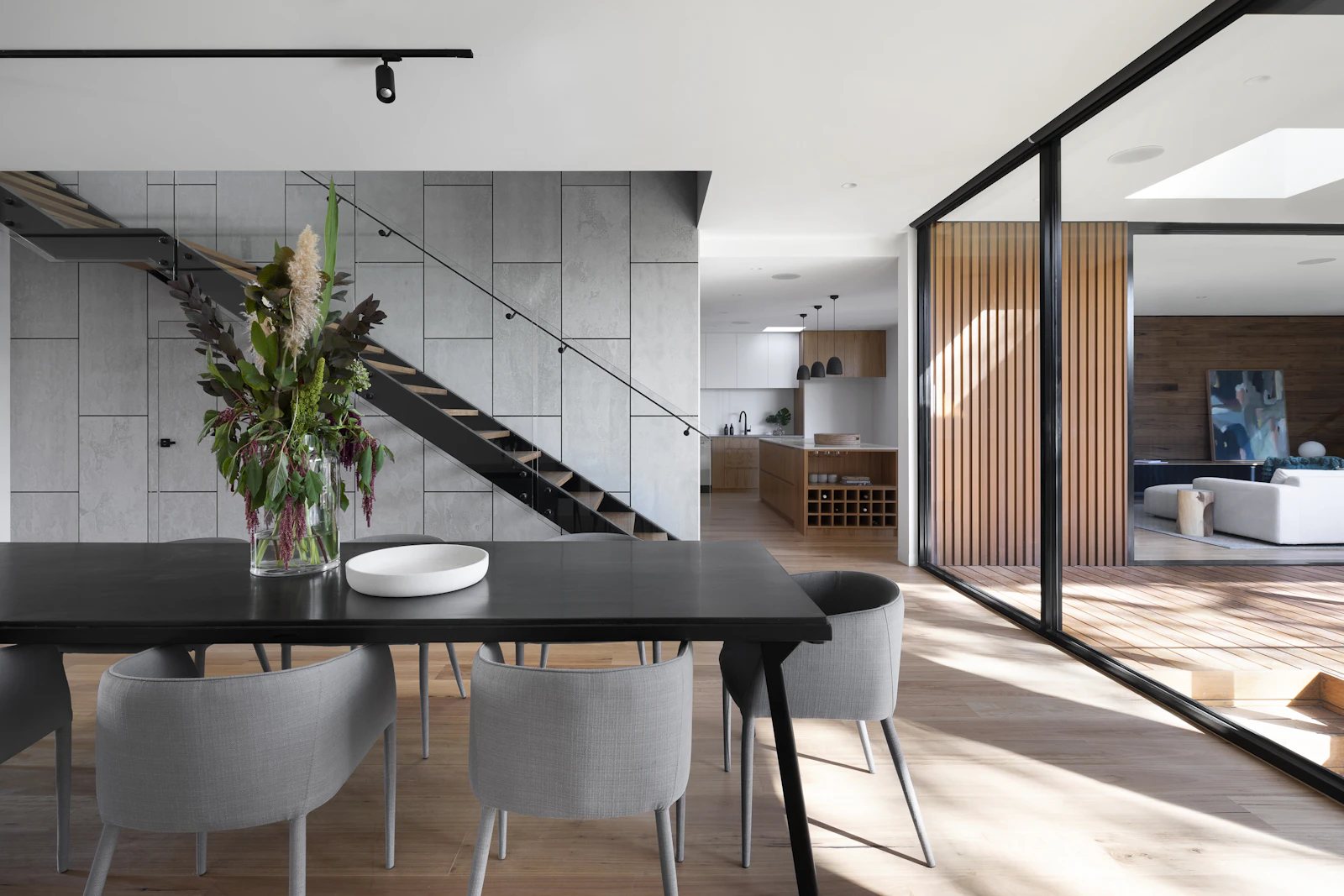
In Dubai most residential lighting lives in a gypsum false ceiling, which also hides AC ducts, sprinkler pipes and smoke detectors. That makes coordination critical, and it is where most problems start. A recessed downlight needs depth above the ceiling and must not clash with a duct; a cove needs a properly detailed recess with room for the LED profile and driver access; linear profiles need straight, crack-free gypsum. In towers, the sprinkler and detector positions approved by Dubai Civil Defence cannot simply be moved to suit a lighting layout.
If you prefer a seamless, glossy or backlit surface, a stretch ceiling is an alternative, but it has its own rules for fixture rings and heat.
05Switching, dimming, DALI and smart lighting control
Control is where lighting design quietly succeeds or fails. The options, from simplest to most capable:
- Conventional switching — one switch per circuit. Fine for a rental refresh, but limits scenes.
- Phase dimming — trailing-edge dimmers on compatible drivers. Cheap and effective if fixtures and dimmers are matched; mismatches cause flicker and buzz.
- Wireless smart lighting — Zigbee, Matter or brand ecosystems controlled from an app or voice. Good for retrofits where you cannot rewire.
- DALI — a wired digital protocol where each fixture or group is individually addressable. The professional standard for villas and larger apartments: reliable, scene-based, easy to change later, and integrates with keypads, motorised curtains and climate.
If you are already renovating, running DALI or at least extra control cabling while walls are open costs little compared with retrofitting. Our guide to smart home systems in Dubai explains how lighting fits with curtains, AC and security.
06How a lighting design project runs
Whether it is one room or a whole villa, a proper lighting design follows the same sequence:
- Brief — how each room is used, at what times, by whom; which art, joinery and furniture need light.
- Concept — layers and mood per room, colour temperatures, key fixtures and the control approach.
- Technical layout — reflected ceiling plans, circuits, scenes, driver locations and a fixture schedule with specs.
- Coordination — check against AC, sprinklers, detectors, curtain pockets and joinery; adjust before construction.
- Procurement and installation — order samples first, then install with first-fix wiring before the ceiling closes.
- Commissioning — aim adjustable fixtures, set dim levels and program scenes once furniture is in place.
07How much does lighting design cost in Dubai?
Budgets depend on whether lighting is part of a wider renovation (ceilings and wiring already open) or a standalone upgrade. Indicative 2026 ranges, fixtures and installation included, excluding VAT:
| Scope | Typical range | What drives the cost |
|---|---|---|
| 1-bed apartment upgrade | 15,000–35,000 | Fixture quality, number of coves, dimming |
| 2–3-bed apartment, full scheme | 35,000–90,000 | Layers per room, linear profiles, smart control |
| Villa, full scheme with DALI | 80,000–250,000+ | Size, decorative fixtures, landscape lighting, keypads |
| Design fee only (if separate) | 5,000–40,000 | Number of rooms, level of technical drawings |
What moves the number: decorative pendants and chandeliers (a single statement piece can cost more than all the downlights combined), the length of LED profiles, the choice between wireless and DALI control, and garden lighting. Where to save: standard-quality downlights in corridors and storage, fewer but better fixtures in main rooms. Where not to save: drivers, dimmers and CRI — they decide whether the system flickers in two years. A refreshed lighting plan is also one of the most effective ways to transform a living room without touching the floor or walls.
08Common lighting design mistakes
- A downlight grid everywhere — flat light, dark walls, a ceiling that looks like Swiss cheese.
- Everything on one switch — no way to create a calm evening scene.
- Mixed colour temperatures — cool and warm light fighting in the same room.
- No light at the mirror — a downlight above the vanity casts shadows exactly where you need clarity.
- Inaccessible drivers — the ceiling has to be cut open for a five-minute repair.
- Ignoring night windows — without curtains or dimmed scenes, glass walls turn into black mirrors.
09How A5renova approaches lighting design
We design lighting together with the rest of the interior, so the ceiling, joinery, curtains and fixtures are drawn once and agree with each other. Our interior design team produces the lighting concept and reflected ceiling plans, the renovation team installs ceilings, wiring and controls in the right order, and curtains are planned around the light so evenings feel finished rather than reflective. Send us your floor plan and how you live in the space, and we will show you a scheme and a realistic budget.
