
The best interior design ideas for living room spaces in Dubai start with the thing most mood boards ignore: a wall of glass, strong sun for most of the year, and air conditioning that runs almost constantly. Get light, layout and materials right for that climate and almost any style — minimal, warm modern, Japandi or classic — will look good and stay comfortable. This guide covers how to handle glare and heat, layouts for typical Dubai living rooms, palettes and materials that age well, layered lighting, furniture sizing rules, and what a living room makeover costs in 2026.
Key takeaways
- Start with light control: floor-to-ceiling glass needs layered sheers and blackout or blinds before any styling works.
- Plan the layout around circulation — keep 80–90 cm walkways and size the rug so the front legs of seating sit on it.
- Warm neutrals, textured finishes and matte surfaces handle Dubai sun and dust better than stark white and gloss.
- Indicative 2026 budgets run from AED 10,000–30,000 for a refresh to AED 80,000–220,000+ for a full redesign.
Start with light: taming floor-to-ceiling glass
Most Dubai apartments in towers built over the last fifteen years have living rooms with full-height glazing. It is the reason you bought the view — and the reason the room can be blindingly bright at 3 pm, hot near the window and reflective on the TV. Before you choose a sofa or a colour, decide how the glass will be controlled.
- Layer the window — a sheer for daytime softness and privacy, plus a blackout or dim-out layer for evenings and afternoon glare. Our guide to sheer curtains in Dubai covers fabrics that handle strong UV.
- Mount high and wide — track in the ceiling or a recessed pelmet, fabric running full height, so the curtains frame the view instead of cutting it.
- Consider motorisation — on wide spans, a motor saves the fabric from constant pulling and lets you schedule closing before the hottest hours.
- Orient the TV — keep screens perpendicular to the glass where possible, never directly opposite it.
Made-to-measure curtains and blinds are one of the few items that change both how the room looks and how it feels to sit in, which is why we treat them as part of the design, not an accessory at the end.
Living room layouts that work in Dubai homes
Dubai living rooms come in a few recurring shapes, and each has a layout that makes the most of it. The trick is to find the natural zones — conversation, TV, dining, circulation — and let furniture define them rather than walls.
| Room type | Typical size | Layout idea | Watch out for |
|---|---|---|---|
| 1-bed apartment, open plan | 18–28 m² | L-shaped sofa facing the view, compact round dining table near the kitchen | Blocking the walkway to the balcony |
| 2–3 bed apartment, long rectangle | 28–45 m² | Two zones: seating group plus dining, split by a rug and pendant | A sofa floating in the middle with no anchor |
| Townhouse or villa, formal living | 35–60 m² | Symmetrical seating around a feature wall or fireplace-style media unit | Oversized furniture that shrinks circulation |
| Villa, double-height space | 45–80 m² | Tall curtains, a statement pendant and a large rug to bring the scale down | Echo and uneven cooling |
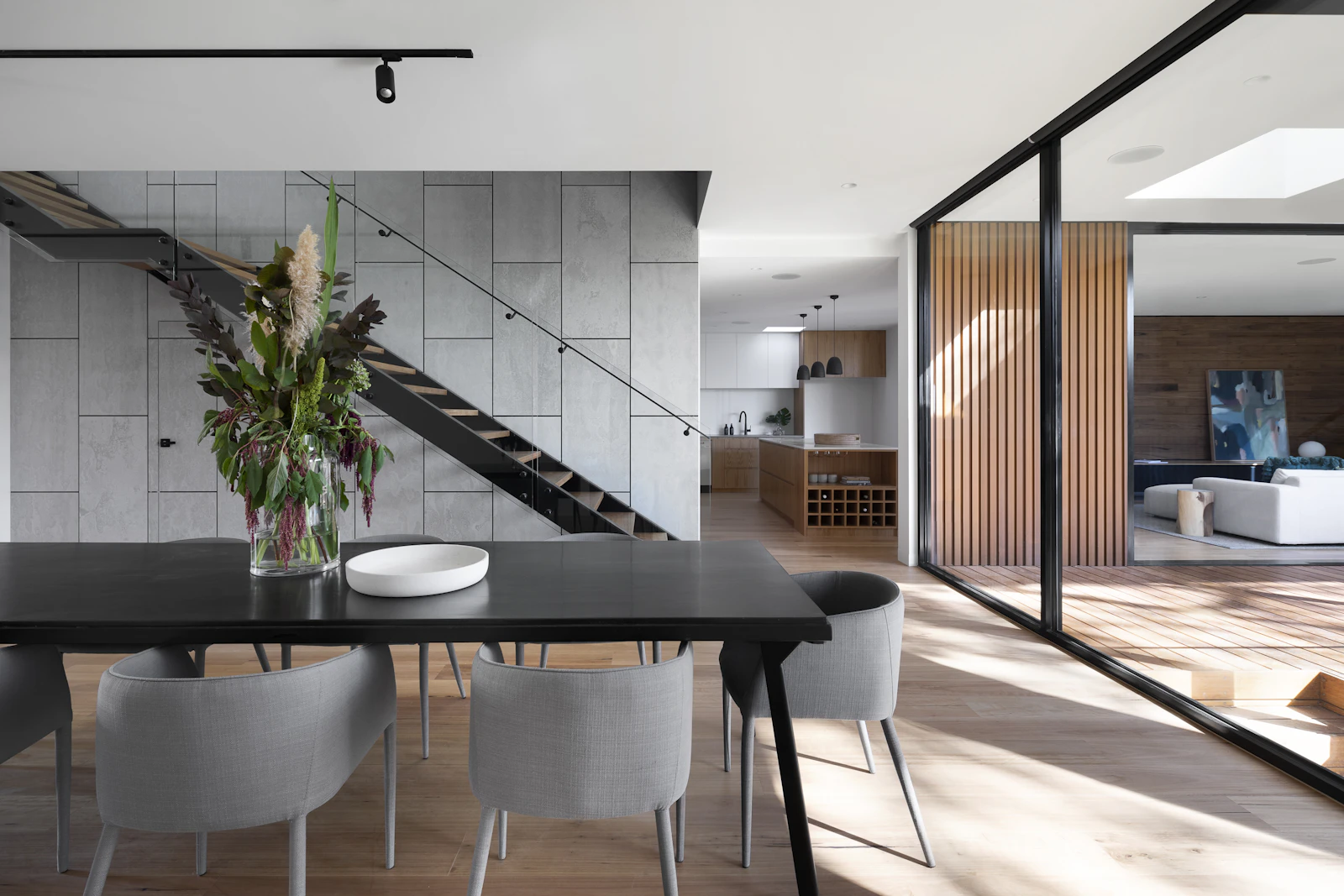
In compact apartments, an open plan often works better with a floating sofa — its back to the dining area, facing the view — than with everything pushed against walls. It creates a clear walkway behind and makes the room read as two spaces, not one crowded one.
Palettes and materials that suit the Dubai climate
Strong sun changes colour. Pure white walls in a south- or west-facing room glare in the afternoon; cool greys can look flat under warm evening light. The palettes that age best here borrow from the landscape: sand, stone, olive, clay, warm taupe, with darker accents for depth.
- Walls — warm off-whites and mineral finishes such as microcement or limewash add texture without busy pattern.
- Floors — large-format porcelain or engineered wood in mid tones hides dust better than very dark or very light floors.
- Fabrics — performance fabrics, linen blends and boucle in lighter colours; avoid silk and delicate velvet next to the glass, where UV fades them.
- Accents — brushed brass, dark timber, travertine or fluted wood panels for a warm modern look.
If the building is newer and the finishes are already neutral, the fastest upgrade is often textiles and one strong material moment — a fluted media wall or a stone coffee table — rather than repainting everything.
Furniture sizing and placement rules
Most living rooms that feel wrong are not badly styled — they are badly sized. A sofa that is 30 cm too long or a rug that is one size too small makes the whole room feel off, however good the pieces are individually.
- Walkways — keep 80–90 cm for main routes and at least 45 cm between sofa and coffee table.
- Rug size — large enough that at least the front legs of every seat sit on it; in most apartments that means 200×300 cm, not 160×230.
- Sofa length — roughly two-thirds of the wall it sits against; leave space at the ends for side tables or lamps.
- TV distance — about 1.5–2.5 times the screen diagonal; mount it so the centre is close to seated eye level.
- Storage — a long, low media unit or built-in joinery hides clutter and makes a small room look calmer.
Layered lighting for day and night
Daylight in Dubai is abundant; evenings are where living rooms fail. A single central fixture or a grid of cold downlights makes the room feel like an office. Good living room lighting works in three layers, ideally on separate circuits or scenes.
- Ambient — soft indirect light: a cove in a stretch or gypsum ceiling, or wall washers along the curtain line.
- Task — floor and table lamps by seating, a reading light by the favourite chair.
- Accent — picture lights, joinery LEDs, a statement pendant over the dining table.
Choose warm colour temperatures (2,700–3,000 K) for the living area and put key circuits on dimmers. With smart home control you can set scenes — day, film, guests — and link them to the motorised curtains, which is where the investment really pays off.
What a living room makeover costs in Dubai in 2026
Costs depend far more on scope than on style. The indicative 2026 ranges below are for a typical apartment living room of 20–40 m²; villas and double-height spaces sit higher because of curtain heights, ceiling work and furniture scale.
| Scope | Budget range | What it includes |
|---|---|---|
| Styling refresh | 10,000–30,000 | Rug, cushions, lamps, art, accessories, paint |
| Furniture and curtains | 30,000–80,000 | Sofa, tables, media unit, made-to-measure curtains |
| Full redesign | 80,000–220,000+ | Design, ceiling and lighting, joinery, flooring, furniture, smart control |
What moves the number: custom joinery versus off-the-shelf units, motorised versus manual curtains, whether you touch the ceiling and electrical layout, and the furniture tier. Any work beyond decoration — new ceilings, lighting circuits, flooring — usually needs a building management NOC, and in some communities developer approval, so allow a week or two for that before work starts. For budget-conscious projects, see our ideas on affordable interior design in Dubai.
From idea to finished room: the design process
A living room redesign moves fastest when decisions are made in the right order — technical first, decorative last:
- Brief — how you use the room, who uses it, what stays, and the budget.
- Measure and plan — accurate plan with windows, AC grilles, sockets and door swings; test two or three layouts.
- Concept — palette, materials and key furniture pieces on one board, with a costed list.
- Technical drawings — ceiling, lighting, electrical and joinery details; building NOC if needed.
- Order long-lead items — custom sofas, curtains and joinery often take 3–8 weeks.
- Works and installation — ceiling, electrics and flooring first, then joinery, curtains and furniture.
- Styling and handover — rugs, art and accessories placed, lighting scenes set.
How A5renova designs living rooms in Dubai
We design living rooms as one package: layout, lighting, curtains and furniture planned together, so the sofa fits the lift, the curtain track is in the ceiling and the lighting scenes match how you actually use the room. Our interior design team handles the concept and drawings, made-to-measure curtains are produced to the millimetre, and you can pick finished pieces from our furniture catalog with real prices before anything is ordered.
Frequently asked questions
How can I make my living room look more luxurious?+
Focus on scale, texture and light rather than expensive objects. Hang curtains from ceiling to floor, use a rug large enough for all the seating, and add layered warm lighting on dimmers. Introduce one or two tactile materials such as travertine, fluted wood or boucle, and hide clutter in a long, low media unit or built-in joinery. Consistent, warm tones make a room look more expensive than many contrasting colours.
What colours work best for a living room in Dubai?+
Warm neutrals tend to work best: sand, warm off-white, stone, taupe, olive and clay, with darker accents in timber or bronze. They stay soft under strong afternoon sun, while pure white can glare and cool greys can look flat in warm evening light. Mineral finishes such as microcement or limewash add depth without pattern and cope well with dust and bright light.
How do I arrange furniture in a small living room?+
Start with circulation: keep main walkways at 80–90 cm and about 45 cm between the sofa and coffee table. Choose a compact or modular sofa roughly two-thirds the length of its wall, place it facing the view or TV, and anchor the group with a rug large enough for the front legs of all seats. Use wall-mounted or low storage to keep the floor clear.
How much does it cost to design a living room in Dubai?+
As an indicative 2026 range for a 20–40 m² apartment living room, a styling refresh costs about AED 10,000–30,000, new furniture with made-to-measure curtains about AED 30,000–80,000, and a full redesign with ceiling, lighting, joinery and furniture about AED 80,000–220,000 or more. Custom joinery, motorised curtains, ceiling and electrical work, and furniture tier move the price most.
What curtains are best for floor-to-ceiling windows?+
Layered curtains work best: a sheer for daytime privacy and soft light, plus a blackout or dim-out layer for glare and evenings. Mount the track in the ceiling or a recessed pelmet and run the fabric full height so it frames the view. On wide spans, motorised tracks protect the fabric and let you close curtains automatically before the hottest part of the day.
Do I need approval to redesign my living room in a Dubai apartment?+
Decoration, furniture and curtains usually need no approval. Once you change ceilings, lighting circuits, flooring or add joinery fixed to walls, most buildings require a building management NOC and sometimes a refundable deposit, and some communities also need developer approval. Anything touching fire systems may involve Dubai Civil Defence. Rules vary by building, so check with management before scheduling works.
Related services