
Luxury interior design in Dubai is a phrase attached to everything from an AED 250,000 apartment refresh to a Palm Jumeirah villa with slab-matched stone and hand-made metalwork, which makes it almost useless as a budget signal on its own. What actually separates a luxury interior from a merely expensive one is the depth of the detail: joinery drawn and built for the room rather than bought from a catalogue, stone selected slab by slab, lighting designed as a layered scheme instead of a grid of downlights, and a drawing package complete enough that nothing important gets decided on site by a foreman with a tape measure. This guide sets out what defines it in 2026, what it costs per square metre, how the process runs, and the places these projects usually come apart.
Key takeaways
- Luxury is defined by custom fabrication, material grade and drawing depth, not by the price of the sofa.
- Indicative 2026 turnkey ranges run roughly AED 7,500-13,000 per sq m for luxury and AED 13,000-25,000+ for ultra-luxury, including furniture.
- Bespoke joinery, natural stone and imported lighting carry the longest lead times: 8-16 weeks is normal, and they set the programme.
- Most failures are procurement and coordination failures, not taste failures: late approvals, unbought long-lead items and MEP that was never coordinated with the ceiling.
What actually defines luxury interior design in Dubai
Dubai has no shortage of expensive interiors that are not luxurious: marble everywhere, a chandelier over a coffee table, and standard 600 mm catalogue wardrobes behind it all. The difference is not spend, it is specificity. A luxury project is one where almost nothing is a stock item and almost nothing is left to improvisation on site.
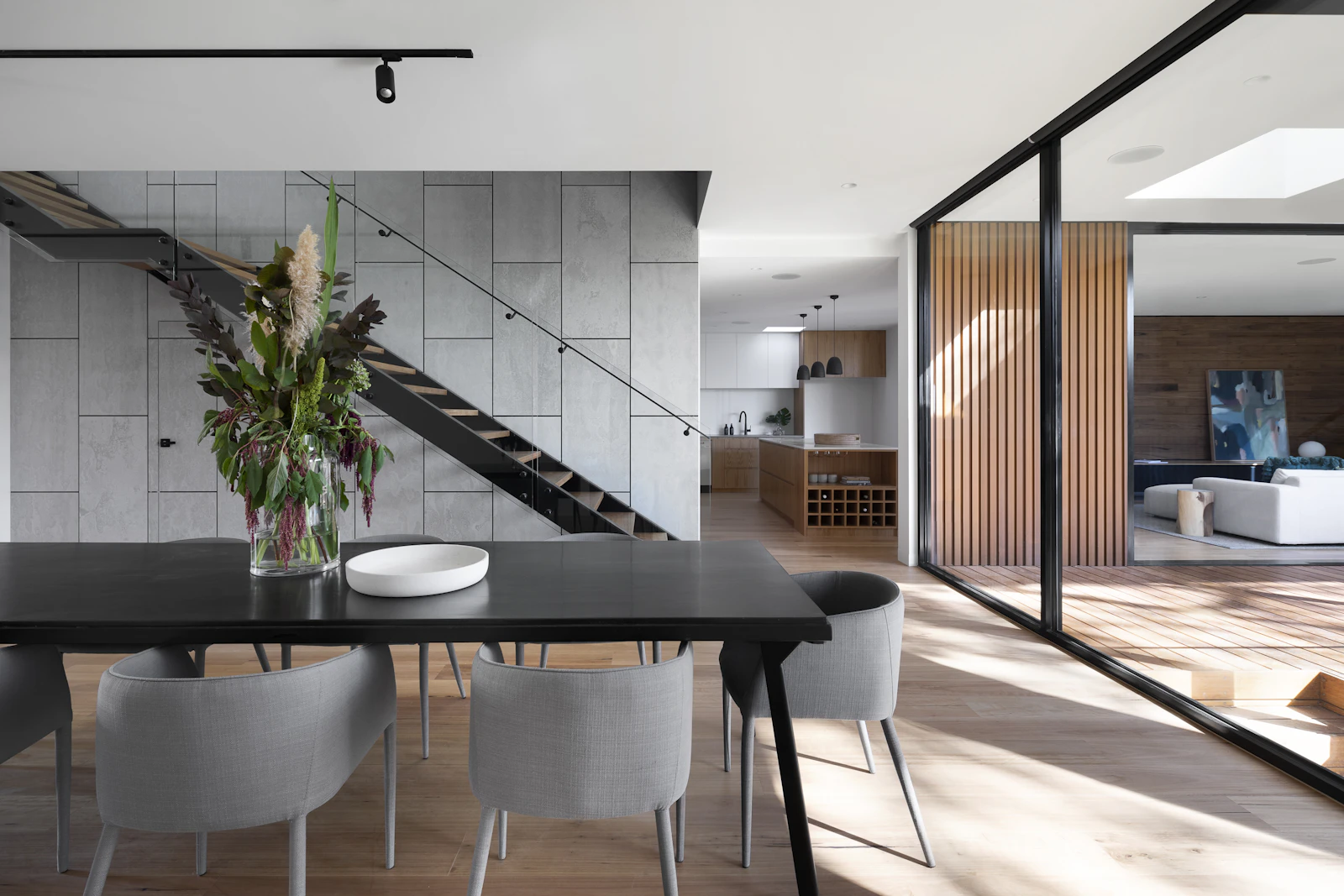
- Bespoke fabrication — wardrobes, kitchens, wall panelling, headboards and vanities drawn to the millimetre for the actual room, not adjusted with filler strips once they arrive.
- Material grade and continuity — stone bought as a reserved bundle so the veining runs across a whole wall, veneer sequence-matched across door fronts, solid brass or stainless hardware rather than plated zinc.
- Designed lighting — a layered scheme with architectural coves, linear profiles, accent spots at the right beam angle and dimming zones, usually with its own drawing and a fixture schedule.
- Coordinated services — air-conditioning grilles, sprinkler heads, speakers and sensors set out on a reflected ceiling plan so they land in a deliberate pattern instead of wherever the MEP team reached first.
- Documentation depth — 80-200 pages of working drawings, elevations, joinery details and schedules. This is the single most reliable indicator that a studio is genuinely operating at a luxury level.
If a studio shows you photorealistic renders but cannot show you a joinery section detail or a reflected ceiling plan, you are buying images, not a luxury interior. The renders are the easy part. The premium you pay buys the set of decisions made before anyone cuts anything, which is the same principle covered in more general terms in our guide to choosing an interior design studio in Dubai.
What luxury interior design costs in Dubai in 2026
Two numbers matter and they are constantly confused. The design fee buys drawings, specification and site supervision. The turnkey figure is design plus construction, joinery, finishes, MEP and furniture — everything needed to walk in with a suitcase. The ranges below are indicative for 2026 and assume a residential project in Dubai.
| Tier | Design fee | Turnkey incl. furniture | What it buys |
|---|---|---|---|
| Premium | 250-450 | 4,500-7,500 | High-grade catalogue finishes, part-bespoke joinery, competent lighting |
| Luxury | 450-800 | 7,500-13,000 | Full bespoke joinery, natural stone, designed lighting, made-to-order furniture |
| Ultra-luxury | 800-1,500+ | 13,000-25,000+ | Imported stone and metalwork, one-off pieces, integrated AV and art |
What moves the number inside a band: the quantity of bespoke joinery, routinely 25-40% of a luxury budget on its own; whether stone is locally supplied or imported and book-matched; how much of the ceiling is dropped and detailed; and how much furniture is made to order rather than picked from a showroom. A 180 sq m apartment done properly to luxury standard sits around AED 1.4-2.3 million turnkey in 2026; the same apartment at premium level lands closer to AED 0.8-1.3 million. To sanity-check the construction budget before design starts, our renovation cost calculator gives a base figure to build from.
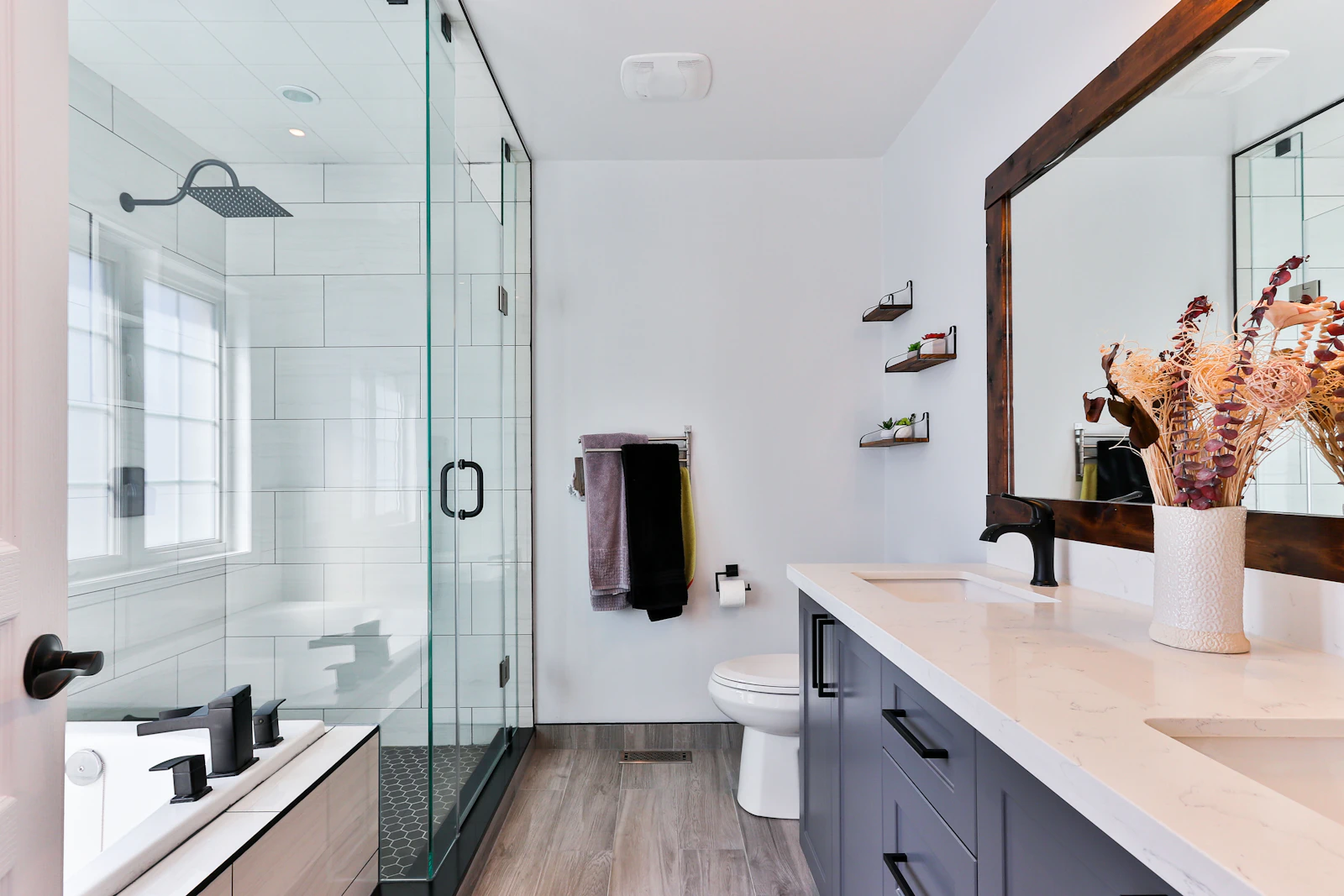
Materials and finishes that actually survive Dubai
Dubai is a hard environment for interiors and it punishes the wrong specification quickly. Coastal humidity, summers above 45°C, constant air-conditioning cycling and fine dust do more damage in three years than a European climate does in ten.
- Natural stone — the default luxury signal, but calcite marbles etch from lemon juice and cosmetics. Honed finishes hide wear far better than polished; on kitchen worktops and busy bathrooms, quartzite or high-grade sintered stone gives the same look with none of the daily anxiety.
- Timber and veneer — solid timber moves badly between a 22°C interior and a humid balcony threshold. Engineered boards with a good veneer are the correct luxury answer here, not a compromise.
- Metalwork — brushed or PVD-coated stainless holds up near the coast; unlacquered brass will patina quickly in Palm and JBR, which is lovely if you wanted it and a complaint if you did not.
- Fabrics and upholstery — anything near a window needs UV-stable fibres. Silk curtains in a west-facing Marina apartment fade visibly inside two years, which is why layered curtain and sheer schemes are a technical decision as much as an aesthetic one.
- Paint and plaster — Venetian and lime plasters read as far more expensive than they cost, but they need a genuinely flat substrate and an applicator who has done a hundred walls, not five.
The process, stage by stage
A luxury project runs the same stages as any other interior design commission, but each one is longer and far more documented. Expect 16-32 weeks end to end for an apartment and 8-14 months for a villa.
- Brief and survey (1-3 weeks) — how you actually live, who visits, what you already own, and a laser survey of the real space, because as-built rarely matches the developer drawing.
- Concept (3-5 weeks) — spatial strategy, mood direction, a physical material board you can hold, and two or three key renders. This is where you argue, not later.
- Design development (4-8 weeks) — layouts fixed, joinery elevations, lighting and reflected ceiling plans, stone and finish schedules, and a first costed bill of quantities.
- Working drawings and approvals (3-6 weeks) — the full technical set, plus the building management NOC, Dubai Municipality where structure or plumbing routes change, DEWA for load changes, and Dubai Civil Defence where sprinklers or detection move.
- Procurement (runs in parallel, 8-16 week leads) — joinery released to the workshop, stone reserved and slab-approved, lighting and imported furniture ordered. Nothing on this list can be recovered later.
- Construction and installation (10-20 weeks) — strip-out, MEP, wet works, then finishes in a strict sequence, with joinery going in after the floor and before the final paint.
- Styling, snagging and handover (2-4 weeks) — furniture placement, art and accessories, a written snag list closed item by item, plus warranties and a care schedule for the stone and timber.
Furniture, lighting and the furnishing budget
Furniture, fixtures and equipment are routinely 25-40% of a luxury turnkey budget, and the line most often underestimated: clients price the construction first, then discover the dining table they liked is AED 90,000 with a 20-week lead time from Italy. Decide early whether pieces come from European brands with long shipping, regional showrooms holding stock, or local makers working to your drawings. All three are legitimate; mixing them without a plan is what blows the budget.
Lighting deserves its own budget line. A designed scheme for a 200 sq m apartment might carry 70-120 fixtures across architectural profiles, downlights, decorative pendants and lamps, and the decorative pieces alone can run AED 60,000-250,000. Locking the fixture schedule before first fix prevents the classic Dubai outcome: a beautiful ceiling with the wrong cut-outs in it. Our furnishing service and the furniture catalogue exist to make this stage predictable rather than exciting.
Where luxury projects actually go wrong
After enough projects the failure modes repeat, and almost none of them are about taste:
- Design signed off before procurement was priced. The concept is approved, then the bill of quantities arrives 40% over and everything gets value-engineered into something ordinary.
- Long-lead items ordered late. Stone, joinery and imported lighting drive the programme. Ordering them after construction starts adds 6-10 weeks that cannot be compressed.
- MEP never coordinated with the ceiling. Sprinkler heads and AC grilles appear in the middle of a feature panel because nobody produced a combined services drawing.
- Approvals treated as paperwork. Moving a bathroom, changing a sprinkler layout or upgrading the electrical load are all approvable, but not retrospectively and not in a week.
- No single point of accountability. A designer, a separate contractor and a separate joinery supplier with nobody contractually responsible for the interfaces is the most expensive way to run a luxury project — the same trap described in our villa interior design guide.
- Stone approved from a photograph. Slabs vary enormously within the same commercial name. Approve the actual bundle, laid out, in daylight.
Approvals, buildings and constraints nobody mentions at concept stage
The most ambitious concept still has to pass a building manager. In a Dubai tower your freedom is narrower than it looks, and the constraints are best discovered in week one rather than week twenty.
- Building or community NOC — building management, plus the community developer in an Emaar or Nakheel address, approves drawings, sets working hours, controls lift access and holds a refundable deposit.
- Dubai Municipality — engaged where layouts, wet areas, drainage routes or anything structural change. Requirements vary by building age and community, so confirm rather than assume.
- Dubai Civil Defence — required whenever sprinkler heads, smoke detection or fire-rated elements are altered. Feature ceilings almost always trigger this.
- DEWA — for load increases, which a designed lighting scheme plus a wine room plus a home cinema can easily create between them.
- Practical limits — many towers restrict noisy works to weekday hours, ban weekend work and limit service-lift bookings, which is why a villa and an apartment of the same value run at completely different speeds.
How A5renova delivers luxury interior design in Dubai
We run luxury projects as one accountable package rather than three separate contracts, because the interfaces are where the money and the months disappear. Interior design produces the full technical set — joinery elevations, reflected ceiling plans, lighting and finish schedules — and the same team carries it through renovation and fit-out, approvals, site supervision and snagging, so the drawing you approved is the thing that gets built. Furnishing and the catalogue run in parallel from concept stage, which is what keeps long-lead furniture and lighting off the critical path. Send us the floor plan, the address and a realistic budget band, and we will tell you honestly which of the three tiers above it actually buys.
Frequently asked questions
How much does luxury interior design cost in Dubai?+
As a 2026 guide, design fees for luxury residential work run roughly AED 450-800 per sq m, rising to AED 800-1,500 and beyond for ultra-luxury. Turnkey figures including construction, bespoke joinery, finishes and furniture sit around AED 7,500-13,000 per sq m at luxury level and AED 13,000-25,000 or more at ultra-luxury. The quantity of bespoke joinery, the stone grade and how much MEP you re-run move the number most.
What is the difference between luxury and premium interior design?+
Premium buys high-grade catalogue products assembled well: good ranges, partly bespoke joinery, a competent lighting layout. Luxury means most elements are made for the specific room — joinery drawn to the millimetre, stone reserved and slab-matched, a designed lighting scheme with its own drawing set. The visible difference is the absence of filler strips, awkward junctions and services landing in the wrong place.
How long does a luxury interior project take in Dubai?+
Plan for about 16-32 weeks end to end for an apartment and 8-14 months for a villa. Design and documentation take 8-16 weeks, approvals 3-6 weeks, and construction 10-20 weeks. Long-lead items such as bespoke joinery, imported stone and decorative lighting run 8-16 weeks and must be ordered during design rather than after construction starts, or they add time that cannot be recovered.
Do I need approvals for a luxury interior fit-out in an apartment?+
Almost always. You need a building management or community NOC before access, Dubai Municipality involvement where layouts, wet areas or drainage change, Dubai Civil Defence approval whenever sprinklers, detection or fire-rated elements are altered, and DEWA for any load increase. Requirements vary by building age and community, so confirm with building management before the concept is signed off rather than after.
Is natural marble a good idea in a Dubai home?+
In the right places, yes. Marble works well on feature walls, in guest bathrooms and on vertical surfaces generally. It is riskier on kitchen worktops and heavily used bathroom counters, where calcite stones etch from citrus and cosmetics. Honed finishes hide wear better than polished, and quartzite or high-grade sintered stone gives a similar look with far more tolerance for daily use.
How much of a luxury budget goes on furniture?+
Furniture, fixtures and equipment typically account for 25-40% of a luxury turnkey budget, and decorative lighting alone can reach AED 60,000-250,000 for a large apartment. It is the line most often underestimated because construction is priced first. Decide early whether pieces come from European brands with long shipping, regional showrooms holding stock, or local makers working to your drawings.
Related services