
Window curtains in Dubai have a harder job than almost anywhere else: in a typical tower apartment they cover a wall of glass three metres high and several metres wide, facing a sun that heats the room for most of the year. Choosing them like ordinary curtains — a rod above the window, any nice fabric — is how owners end up with sagging tracks, faded panels and a bedroom that is never fully dark. This guide covers the tracks, fabrics and layering that work on floor-to-ceiling glass, how much heat curtains really cut, when motorisation is worth it and indicative 2026 prices in AED.
Key takeaways
- On full-height glass, curtains hang from a ceiling-fixed track or a ceiling pocket, not a rod — the track is what decides how they look and last.
- Use a layered system: a sheer for daytime glare and privacy plus a blackout or dim-out layer with a lining that faces the glass.
- Fabric choice matters: polyester-rich, UV-stable fabrics with a light-coloured backing resist fading and reflect more heat than dark cotton or linen.
- Indicative 2026 budget: roughly AED 2,500–7,000 per window wall for manual layered curtains, AED 6,000–15,000 with motorised tracks.
Why curtains for floor-to-ceiling glass are a different job
Most residential towers in Dubai Marina, JLT, Downtown and Business Bay use full-height glazing, often a curtain-wall system that runs from slab to slab. That changes three things. First, there is no wall above the window for a rod, so the curtain has to hang from the ceiling or from a pocket built into it. Second, the panels are heavy: a double-layer curtain three metres high across a four-metre wall can weigh well over ten kilograms, and a cheap track bends under it within a year. Third, the glass faces strong sun for most of the day, so fabrics fade, linings degrade and the gap at the edges lets in a stripe of light exactly where you do not want it.
The good news is that the solution is well understood. Get the track and fixing right, choose a fabric that survives UV, layer two functions instead of asking one fabric to do everything, and window curtains become one of the most effective upgrades in a Dubai apartment — for comfort, sleep and the cooling bill. If you are still deciding between curtains and blinds, our guide to blinds and curtains in Dubai compares the two.
Tracks and mounting: ceiling, pocket or wall
The track decides how the curtain hangs, how far it stacks back and how long it lasts. On full-height glass there are three realistic options:
- Ceiling-mounted track — fixed directly to the slab or a reinforced gypsum ceiling. The most common choice; use aluminium profiles rated for the curtain weight, with brackets every 50–70 cm.
- Recessed ceiling pocket — a channel built into a gypsum or stretch ceiling that hides the track completely. Cleanest look, but it must be planned before the ceiling is finished.
- Wall-mounted track — only where there is a solid wall return or bulkhead above the glass; on curtain walls this is rarely possible.
- Ripple fold vs pinch pleat — ripple fold (wave) heading runs on dedicated carriers and gives even, hotel-style folds; pinch pleat needs a little more stacking space and looks more classic.
Two details separate a good installation from an average one. The track should extend 15–30 cm beyond the glass on each side so the stacked curtain does not block the view, and it should be set 8–12 cm from the glass so the fabric does not touch hot panes or block the AC grille. Where the ceiling is hollow gypsum, fixings must go into timber or metal reinforcement, not just the board.
Fabrics that handle Dubai heat and sun
In most Dubai apartments, window curtains are a heat-control tool as much as a decorative one. A lined curtain pulled across sunny glass in the afternoon noticeably reduces the heat radiating into the room, which lets the AC cycle less. How well it works depends on the fabric:
| Fabric | Light control | Heat & UV resistance | Best for |
|---|---|---|---|
| Sheer polyester / voile | Filters glare, keeps view | Good UV stability, little insulation | Living rooms, daytime layer |
| Linen-look polyester | Soft filtering to dim-out | Good, holds colour | Living and dining rooms |
| Natural linen / cotton | Varies, often needs lining | Fades and shrinks faster in sun | Shaded rooms, decor layer |
| Dim-out woven | Darkens room, some glow | Good, light backing reflects heat | Bedrooms, west-facing rooms |
| Blackout (3-pass / coated) | Near full darkness | Best insulation; choose a light back | Bedrooms, media rooms |
Practical rules: choose a light-coloured or white backing facing the glass, because dark backings absorb heat and age faster; avoid untreated natural fibres on west-facing glass; and ask for fabrics labelled for UV and colour fastness. Our blackout curtains buyer's guide goes deeper into linings and blackout levels.
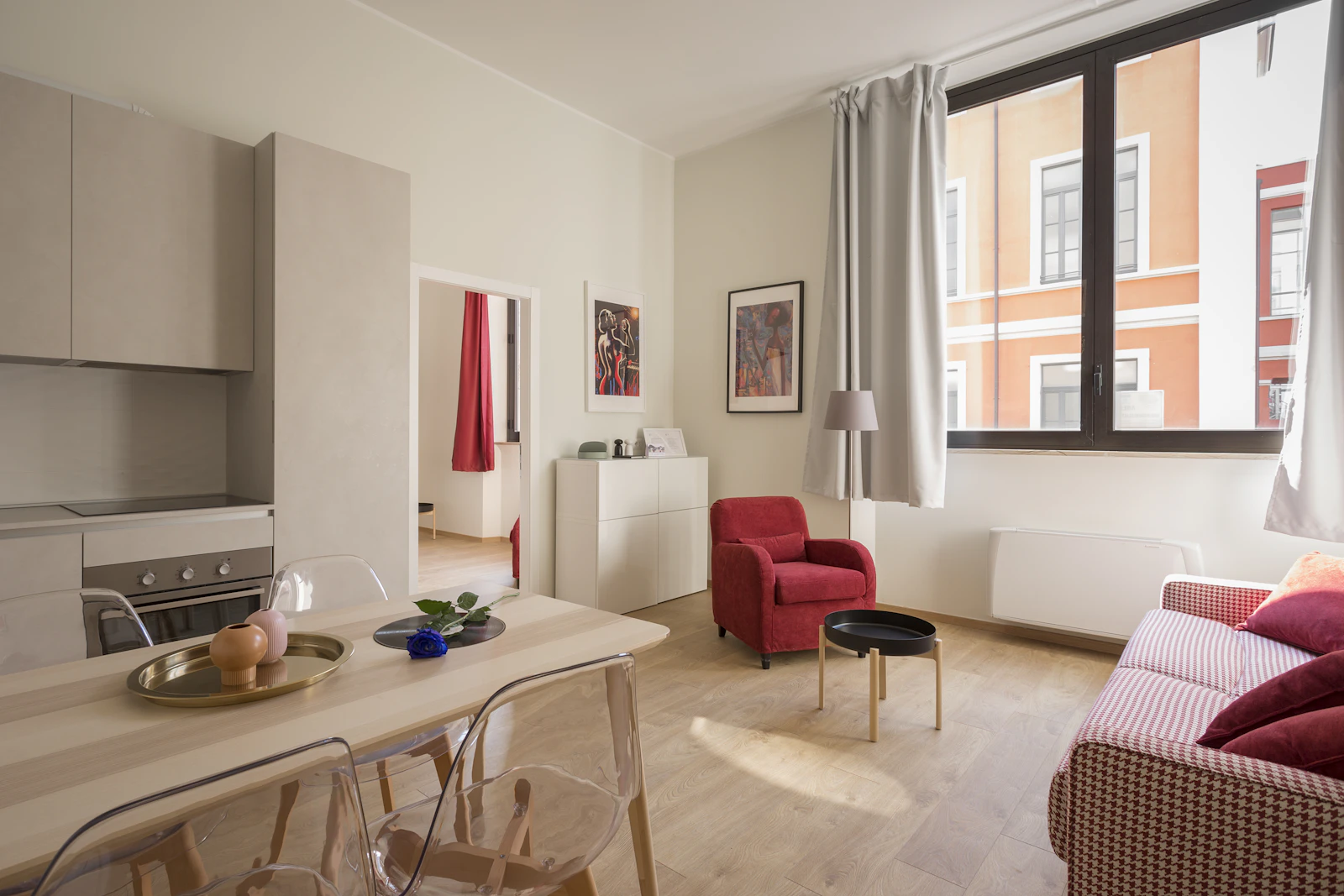
Layering: sheer plus blackout on one wall of glass
Asking one curtain to give daytime privacy, a view, evening darkness and heat control never works well. The standard answer for floor-to-ceiling glass is a double track: a sheer on the glass side and a heavier dim-out or blackout layer on the room side. During the day you keep the sheer closed against glare and passers-by in the next tower; at night or in peak afternoon sun you close the heavy layer.
Variations that work well in Dubai: a sheer combined with a roller blackout blind fixed to the window frame in bedrooms, where full darkness matters most; or a sheer plus a heavy linen-look curtain in living rooms, where a soft dim-out is enough. To get real darkness, extend the blackout track beyond the glass, keep the curtain long enough to just touch the floor and consider a return at the ends so light does not leak around the sides.
Manual or motorised window curtains?
On a 4–6 metre wall of glass, a heavy blackout curtain is tiring to pull by hand, and the constant tugging is what wears out carriers and loosens brackets. Motorised tracks solve this and add useful automation: curtains that close on west-facing glass at 2 pm, open with your alarm or shut when the AC starts.
- Worth motorising — wide or very tall glass, double-track systems, west and south-facing rooms, bedrooms on a schedule, rental units where tenants damage manual tracks.
- Fine to keep manual — narrow windows, light sheers only, rooms you rarely darken.
- Power — wired motors need a socket or spur at the ceiling, best planned before the ceiling is closed; battery motors avoid wiring but need recharging.
- Integration — most motors connect to common smart-home apps and voice assistants; check compatibility with your smart-home system before ordering.
For a closer look at motors, brands and wiring, read our article on motorized curtains in Dubai.
How much do window curtains cost in Dubai?
Window curtains for full-height glass are priced by the width of the wall, the drop, the fabric and the track. The figures below are indicative 2026 ranges for one 3–4 m wide, 2.7–3 m high window wall, made to measure and installed.
| Configuration | Manual track | Motorised track |
|---|---|---|
| Single sheer layer | 1,200–3,000 | 3,500–6,500 |
| Single blackout / dim-out layer | 1,800–4,000 | 4,000–7,500 |
| Double layer: sheer + blackout | 2,500–7,000 | 6,000–15,000 |
| Premium fabrics, ceiling pocket, wave heading | 6,000–12,000 | 10,000–20,000+ |
What moves the price: fabric quality and fullness (wave headings use roughly 2–2.5 times the track width in fabric), the number of tracks, motor brand and wiring, ceiling work for a pocket, and site access. A whole apartment is usually priced as a package, which lowers the cost per window. For a full breakdown by fabric and room, see our curtain price guide.

Measuring and installing window curtains, step by step
Most problems with window curtains in Dubai come from measuring and fixing, not from the fabric. A professional process looks like this:
- Site measure — width at several points, drop at both ends and the centre (slabs are rarely perfectly level), ceiling type and AC grille positions.
- Choose the system — track type, number of layers, heading, manual or motorised, and power position if motorised.
- Select fabrics — check samples against your actual glass in daylight and at night; tinted glass changes colours.
- Production — made-to-measure curtains typically take 1–3 weeks depending on fabric and stock.
- Install tracks — fixings into slab or reinforcement, tracks levelled and tested under load.
- Hang and dress — curtains hung, hems checked for the floor line, folds trained and motors programmed.
If you are renovating at the same time, decide on curtains before the ceiling is finished. A ceiling pocket and a power point for motors cost little during works and a lot afterwards.
How A5renova makes window curtains in Dubai
We measure on site, recommend a track and layering system for each window, and make the curtains to measure from fabrics chosen for Dubai sun. Our curtains service covers manual and motorised systems, with installation by our own team, and if you are renovating we plan ceiling pockets and power with the renovation team so nothing is retrofitted later. For automation, we connect motors to your smart-home setup. Send us your window sizes and orientation, and we will propose a system and an indicative price.
Frequently asked questions
What curtains are best for floor-to-ceiling windows in Dubai?+
For full-height glass, a double-track system usually works best: a UV-stable sheer on the glass side for daytime glare and privacy, and a dim-out or blackout curtain with a light-coloured lining on the room side for darkness and heat control. Hang them from a ceiling-fixed aluminium track or a recessed ceiling pocket, extended beyond the glass so the curtains stack clear of the view.
How much do window curtains cost in Dubai?+
As an indicative 2026 guide, made-to-measure curtains for one floor-to-ceiling wall about 3–4 m wide cost roughly AED 1,200–3,000 for a single manual sheer, AED 2,500–7,000 for a manual sheer plus blackout, and AED 6,000–15,000 with motorised tracks. Fabric quality, wave heading fullness, motor brand, wiring and ceiling pockets move the price most.
Do curtains really reduce heat in Dubai apartments?+
Yes, noticeably, when they are lined and closed during peak sun. A dim-out or blackout curtain with a light-coloured backing reflects part of the heat coming through the glass and reduces how much radiates into the room, so the AC cycles less. They work best on west and south-facing glass and when the track sits slightly away from the glass.
Should curtains be mounted on the ceiling or the wall?+
On floor-to-ceiling glass, the ceiling is almost always the right choice, because there is no wall above the window for brackets. Fix the track to the slab or reinforced gypsum, or plan a recessed ceiling pocket during renovation for a hidden track. Wall mounting only works where there is a solid wall or bulkhead above the glass.
Are motorised curtains worth it for large windows?+
For wide or very tall glass, double layers and heavy blackout fabrics, usually yes. Motorised tracks prevent the pulling that wears out manual carriers, and they can close automatically during afternoon sun or open on a schedule. Wired motors need a ceiling power point, ideally planned before the ceiling is closed; battery motors avoid wiring but need periodic charging.
How long does it take to make and install curtains in Dubai?+
After the site measure and fabric selection, made-to-measure curtains typically take 1–3 weeks to produce, depending on fabric availability and the number of windows. Installation of tracks and curtains for a standard apartment usually takes one day. Motorised systems may add a few days for motor delivery, wiring and programming, and building permits can add time.
Related services