
Good home interior design ideas are everywhere online, but most of them were photographed in soft northern light, in houses with radiators and deep windowsills — not in a Dubai apartment with floor-to-ceiling glass, air-conditioning eleven months a year and a landlord who wants the walls back white. This guide filters fifteen looks through those realities. For each one you'll see what it actually involves, roughly what it costs to apply in 2026, and where it tends to go wrong, so you can pick two or three ideas that fit your home rather than copying a mood board that won't survive the first summer.
Key takeaways
- Pick one base style and borrow at most two accents from others — homes that mix five looks read as unfinished.
- In Dubai, light control, AC grilles and sand-tolerant materials matter more than the trend you start from.
- Applying a look to a typical 1–2 bedroom apartment costs roughly AED 15,000–120,000 in 2026, depending on how much is built rather than bought.
- Fixed elements — ceilings, built-ins, lighting — create most of the impact; loose decor is the easiest layer to change later.
What makes home interior design ideas work in Dubai
Before choosing a style, it helps to know the three forces every Dubai interior has to answer to. The first is light: strong, white and often hitting the room low from the west in the afternoon. Colours that look warm in a photo can look washed out here, and dark floors show every grain of dust. The second is climate: dry, cold air-conditioned rooms against humid balconies, which punishes cheap veneers, solid-wood tops without proper sealing, and some natural fabrics. The third is tenure: many owners rent their units out, and many residents are tenants, so reversibility and durability carry real value.
The practical rule that follows: choose ideas that rely on texture, layering and good lighting rather than on fragile finishes. That is why calm, natural looks dominate Dubai projects, and why bolder styles work best when they are concentrated in furniture, art and textiles you can move. If you want a deeper view of how a full project is run, our guide to residential interior design in Dubai covers the process end to end.
Calm looks: ideas 1–4 for a light, easy home
These four are the safest starting points for most apartments and villas, because they tolerate strong sunlight and age gracefully.
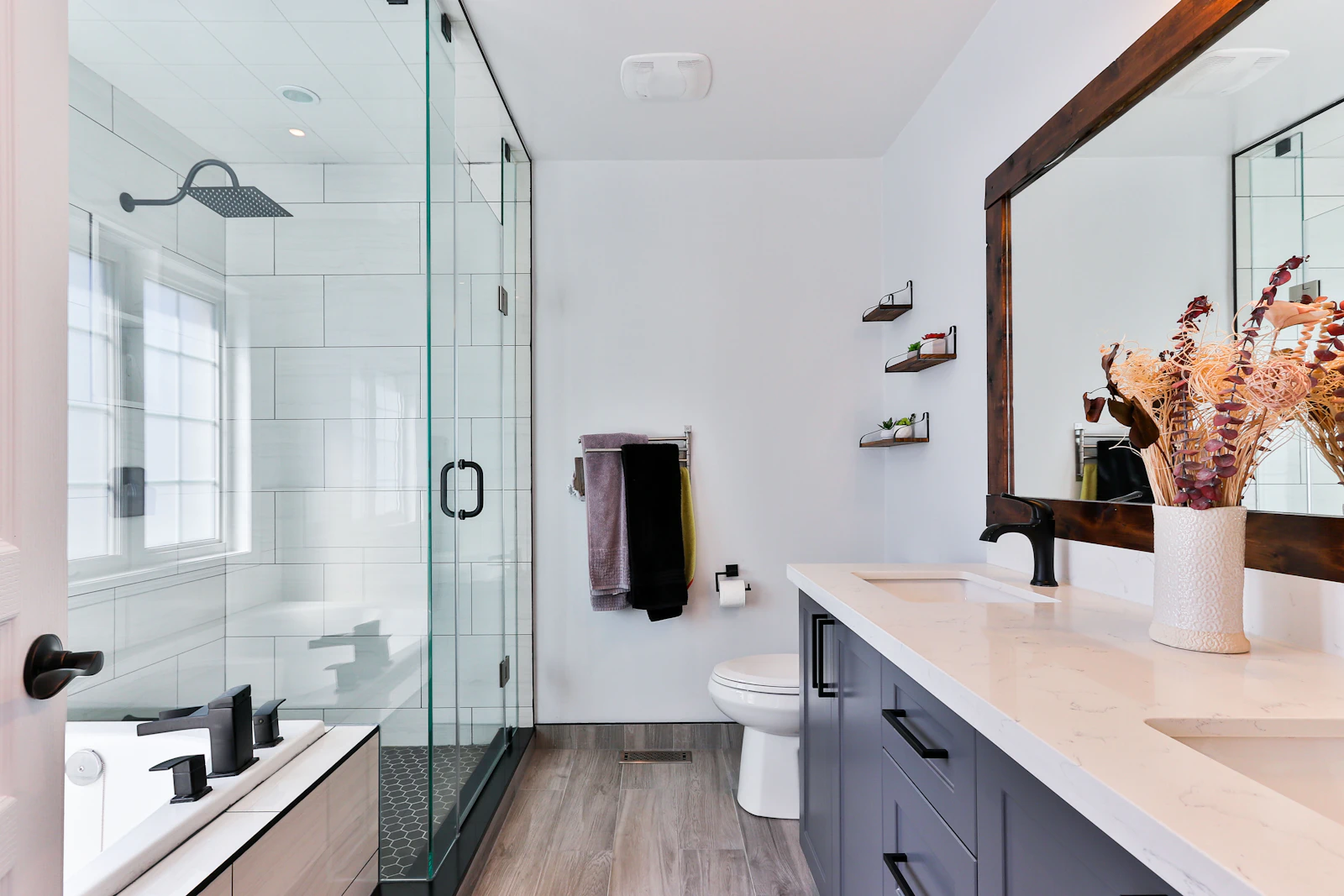
- 1. Warm minimalism — off-white walls, sand and oat tones, oak or walnut, very few objects. It feels expensive because it relies on proportion and quality, not quantity. Works especially well in compact Marina or JVC units.
- 2. Japandi — the Japanese-Scandinavian blend: low furniture, light timber, paper or linen lampshades, a muted palette with one darker accent such as charcoal or olive. Ideal for bedrooms and reading corners.
- 3. Scandinavian, adapted — the classic white-and-pale-wood look, warmed up with beige instead of cold white and with heavier curtains, because pure Nordic interiors look clinical under Dubai sun.
- 4. Quiet luxury — stone, bouclé, brushed brass, tonal layers of cream and taupe, concealed lighting. Popular in Downtown and Dubai Hills; the budget goes into a few excellent pieces and a well-lit ceiling.
All four share a palette that hides dust, flatters strong light and makes resale or rental photos look good. If you are furnishing a unit for tenants, warm minimalism or adapted Scandinavian is usually the best return; see our notes on furnishing an apartment for rent.
Character looks: ideas 5–9 with more personality
If calm feels too neutral, these styles add identity. They need a firmer hand, because each is easy to overdo.
- 5. Modern Arabic — mashrabiya-inspired screens, arches, geometric tiles and brass, used sparingly against plain walls. One arch or one patterned screen is enough; a whole room of motifs becomes a theme hotel.
- 6. Mediterranean — limewash or microcement walls, terracotta, rattan, linen and olive green. Suits villas with terraces and translates well to a balcony-facing living room.
- 7. Mid-century modern — tapered legs, teak, mustard and teal accents, globe lights. Great for an investor who wants a recognisable look in a studio without heavy construction.
- 8. Art deco revival — curves, fluted panels, velvet, smoked glass and gold. Works best in one room — a dining area or a powder room — rather than across the whole home.
- 9. Curated eclectic — a mix of vintage, travel finds and art held together by a strict colour range. It looks effortless only when the base (walls, floors, lighting) is very simple.
The common trade-off: character looks photograph beautifully but date faster and suit fewer buyers or tenants. Keep the bold parts in loose furniture, art and lighting, and keep fixed finishes neutral so the next owner — or your future self — can change direction without a renovation.
Practical ideas 10–15 for compact Dubai layouts
These are not styles but moves that improve almost any home, whichever look you choose. They matter most in one- and two-bedroom apartments where every metre counts.
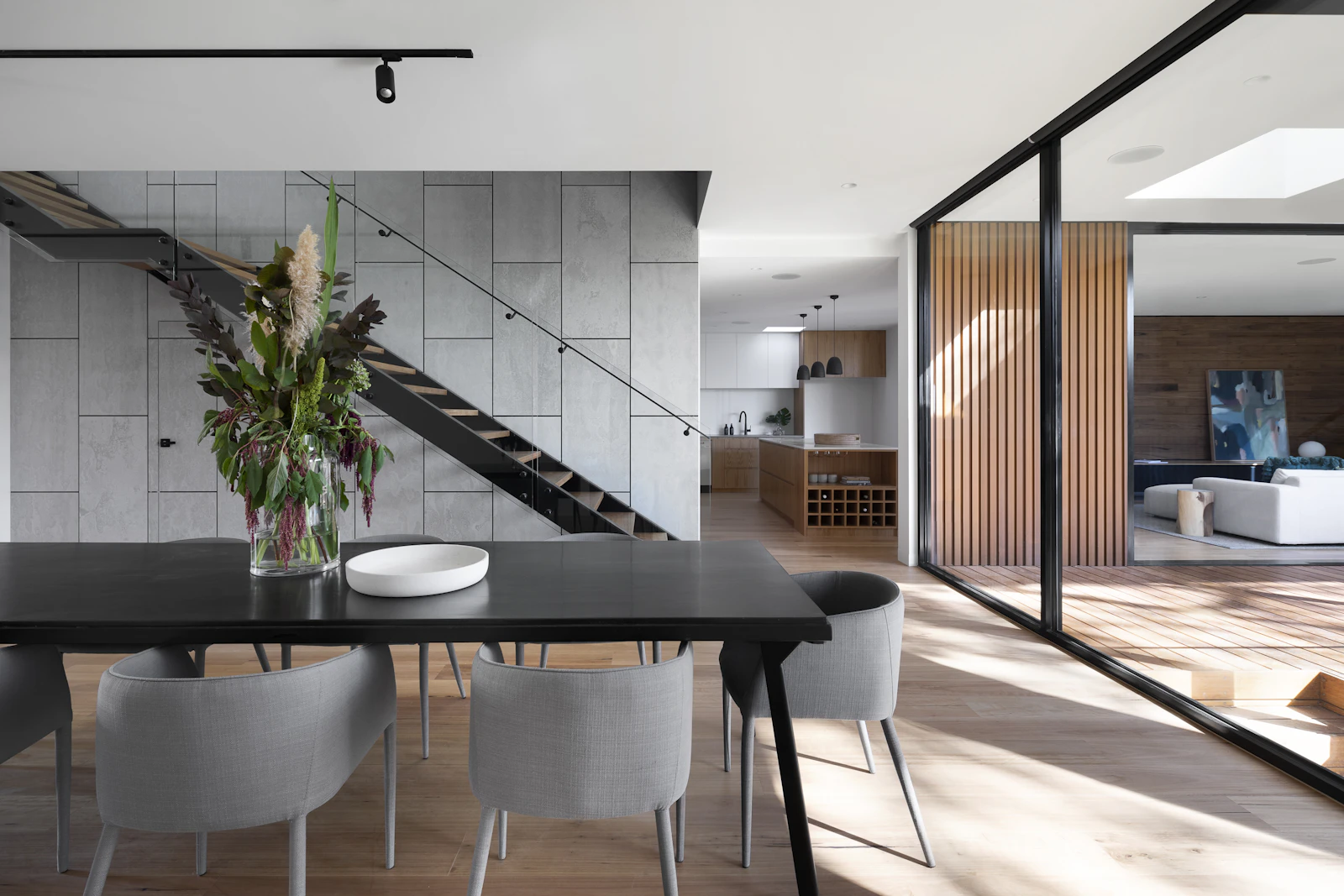
- 10. Full-height built-ins — floor-to-ceiling wardrobes and media walls in the same colour as the walls disappear visually and double storage. Bespoke joinery is the single biggest upgrade in small units.
- 11. Zoning without walls — a rug, a pendant and a shelving unit can define a dining or work zone in an open-plan studio far better than a partition.
- 12. Layered window treatments — sheer plus blackout on a double track controls glare, privacy and heat. Made-to-measure curtains hung from ceiling to floor also make rooms look taller.
- 13. A designed ceiling — a shadow-gap or stretch ceiling with concealed LED strips replaces a single harsh downlight grid and hides AC lines neatly.
- 14. Three-layer lighting — ambient, task and accent on separate circuits or smart scenes, so one room can be bright for work and soft in the evening.
- 15. Mirrors and reflective surfaces — a large mirror opposite a window, or a mirrored wardrobe in a narrow bedroom, adds light and depth at little cost.
What it costs to apply these ideas in 2026
Most of the price difference comes from one question: are you buying things, or building them? Loose furniture and decor are fast and predictable. Joinery, ceilings, lighting changes and wall finishes need trades, approvals and time. The ranges below are indicative for a typical 1–2 bedroom apartment in Dubai.
| Level of change | Typical scope | Indicative range | Time |
|---|---|---|---|
| Refresh | Paint, curtains, rugs, lighting fixtures, art, a few new pieces | 15,000–40,000 | 2–4 weeks |
| Restyle | Full furniture package, made-to-measure curtains, one feature wall | 40,000–90,000 | 4–8 weeks |
| Partial build | Above plus built-in wardrobes, media wall, ceiling with LED | 90,000–180,000 | 6–10 weeks |
| Full redesign | Layout changes, kitchen and bathrooms, joinery throughout | 180,000–450,000+ | 10–16 weeks |
What moves the number: the share of bespoke joinery, natural stone versus porcelain, imported versus locally sourced furniture, and whether any work needs a building NOC. Quiet luxury and art deco sit high because of materials; warm minimalism and adapted Scandinavian can look premium on a modest budget. For a quick sense of your own figure, try the renovation calculator.
Materials and colours that survive the Dubai climate
The best-looking idea fails if the materials can't handle dust, UV and the swing between cold AC and humid air. A few rules of thumb from Dubai projects:
- Floors — large-format porcelain and engineered wood with a matt finish hide dust better than high-gloss tiles or very dark planks.
- Fabrics — performance linen blends and polyester-linen sheers resist fading; pure silk and some cottons yellow behind sunny glass within a year or two.
- Timber — choose engineered or well-sealed solid wood, and keep it away from direct AC jets to avoid cracking.
- Walls — washable matt or eggshell paint, limewash or microcement; avoid textured wallpaper in humid bathrooms.
- Colours — warm whites, sand, greige, sage and terracotta read well in strong light; cool greys can look flat and cold.
How to turn ideas into a plan you can build
Mood boards are the easy part. Turning them into a home that works takes a short, disciplined sequence:
- List how you live — who uses each room, when, and what annoys you now (glare, storage, noise, clutter).
- Choose one base style and at most two accents, then fix a palette of four to six colours and materials.
- Measure and draw a furniture layout to scale, including AC grilles, sockets, doors and window tracks.
- Decide what is built and what is bought — built-ins, ceilings and lighting first, because they need trades and sometimes a building NOC.
- Set a budget with a 10–15% buffer and get comparable quotes on the same specification.
- Order long-lead items early — imported sofas and custom joinery can take 6–12 weeks.
- Install in order: civil and electrical work, ceilings, paint, joinery, curtains, then furniture and styling.
Common mistakes when copying interior ideas
The same problems appear in many Dubai homes. Furniture bought before measuring, so sofas block AC returns or balcony doors. Curtains hung at window height instead of ceiling height, which makes rooms look lower. A single cold downlight grid as the only lighting. Rugs that are too small and float in the middle of the room. And, most often, too many styles at once — a Moroccan lamp, a Scandinavian chair and an art deco cabinet with no common thread. The fix is rarely more spending; it is a clear base style and a palette applied consistently. For room-specific inspiration, see our living room interior design ideas.
How A5renova brings these ideas to life
A5renova takes a home from mood board to finished rooms in one team: our interior design service fixes the style, layout and specification; the furniture catalogue and furnishing service supply complete room sets at fixed prices; and our own crews handle ceilings, joinery, lighting and made-to-measure curtains, including building NOCs where they are needed.
Frequently asked questions
What interior design style is most popular in Dubai in 2026?+
Warm minimalism and Japandi lead in apartments, while quiet luxury dominates higher-end villas and Downtown units. All three use neutral, warm palettes, natural textures and concealed lighting, which flatter strong sunlight and hide dust. Modern Arabic accents — an arch, a patterned screen, brass details — are a popular way to add local character on top of a calm base without committing the whole home to one theme.
How much does it cost to redesign a home interior in Dubai?+
Indicatively, a cosmetic refresh of a 1–2 bedroom apartment costs around AED 15,000–40,000, a full furniture and textile restyle AED 40,000–90,000, and a redesign with built-ins, ceilings and lighting AED 90,000–180,000. Full renovations with new kitchens and bathrooms run higher. The biggest variables are how much bespoke joinery you add, material grades and whether furniture is imported.
How can I make a small Dubai apartment look bigger?+
Use full-height built-in storage in the wall colour, hang curtains from ceiling to floor, choose furniture on legs, and add a large mirror opposite the window. Keep the palette light and consistent across rooms so the eye travels without interruption. Replacing a grid of downlights with concealed LED lighting along the ceiling edges also makes the space feel taller and calmer.
Which colours work best in Dubai homes?+
Warm whites, sand, greige, oat, sage and soft terracotta work best, because Dubai light is strong and white and makes cool greys look flat. Mid-tone floors hide dust better than very dark or very light ones. If you want a bold colour, use it on furniture, a single feature wall or textiles, where it is easy to change if it fades or dates.
Can tenants change the interior of a rented apartment in Dubai?+
Tenants can usually change loose furniture, rugs, curtains and decor freely, but painting, drilling, ceilings or any fixed works normally need the landlord's written consent, and structural or MEP changes need a building NOC as well. Many landlords expect the unit returned in its original condition. Reversible ideas — freestanding storage, tension-rod curtains, plug-in lighting — are the safest choice.
Do I need an interior designer or can I do it myself?+
A refresh with paint, curtains and new furniture is manageable yourself if you measure carefully and stick to one style. Once you add built-ins, ceilings, lighting changes or layout moves, a designer pays for themselves by preventing ordering errors, coordinating trades and handling building approvals. Many owners use a designer for the plan and specification and then buy furniture from a curated catalogue.
Related services