
Luxury curtains in Dubai are judged less by the price of the fabric than by how the whole window is resolved: a heavy drape that hangs perfectly from a hidden ceiling track, a sheer that softens the glare without killing the view, and motors that close everything at sunset without anyone touching a cord. In a city with intense sun, full-height glazing and double-height living rooms, that takes planning as much as taste. This 2026 guide covers the fabrics that last in Dubai light, how to layer sheer, main and blackout curtains, motorisation for villas and penthouses, and indicative AED costs per room.
Key takeaways
- Luxury is in the make as much as the fabric: generous fullness, interlining, hand-finished hems and concealed ceiling tracks.
- Dubai sun fades silk and dark velvet fast — line every main curtain and put a UV-filtering sheer in front of the glass.
- Layering sheer + main curtain + blackout lining (or a blind) gives privacy, glare control and full darkness from one window.
- Indicative 2026 budgets run from about AED 4,000–9,000 per standard window to AED 25,000–60,000+ for motorised double-height glazing.
What makes luxury curtains in Dubai different
Two curtains made from the same fabric can look worlds apart. What separates luxury curtains in Dubai from a good standard curtain is a set of decisions that are easy to skip when a budget is tight:
- Fullness — 2.5 to 3 times the track width in fabric rather than 1.8–2, so folds are deep and even when the curtain is closed.
- Lining and interlining — a soft interlining between face fabric and lining gives body and drape, adds insulation and protects the face fabric from the sun.
- Headings — a clean wave or ripple fold on a concealed track for modern interiors; hand-pleated double or triple pinch pleats for classic ones.
- Hidden hardware — tracks recessed into a gypsum curtain pocket or ceiling channel, so fabric appears to fall straight from the ceiling.
- Finishing — weighted, mitred corners, hand-sewn hems, pattern matched across widths and lengths cut to hover just above or just touch the floor.
None of this is visible in a fabric swatch, which is why the make-up and installation deserve as much attention as the collection you choose. Our guide to made-to-measure curtains in Dubai covers the basics of measuring and making in more detail.
Fabrics that look expensive and survive Dubai light
Dubai sun is the main enemy of luxury fabrics. A south- or west-facing window behind floor-to-ceiling glass can fade an unlined silk within one or two summers. Choose fabric with the orientation of the room in mind, not just the mood board.
- Linen and linen blends — the most requested look in modern villas: relaxed, textured, light-diffusing. Pure linen creases and can drop in humidity; a linen–polyester blend keeps the look with more stability.
- Silk and silk-look fabrics — unmatched sheen for formal living and dining rooms, but fragile in sun. Real silk should always be lined and interlined; high-quality faux silks are a sensible choice for sun-exposed glazing.
- Velvet — rich colour and excellent acoustic and thermal performance for bedrooms, cinemas and majlis rooms. Dark velvets show fading and dust; mid-tones age better.
- Wool and wool blends — heavy, beautifully draping, good for acoustics; best in bedrooms and studies rather than sunlit living rooms.
- Performance sheers — fine voiles and open weaves with UV resistance; they soften glare and protect everything behind them, which makes them the unsung hero of any luxury scheme.
How much do luxury curtains cost in Dubai in 2026?
Prices depend on fabric, fullness, lining, hardware and height, so quotes are best compared per window rather than per metre of fabric. The ranges below are indicative 2026 figures including making, standard lining and installation; for everyday price points see our curtain price guide for Dubai.
| Window type | Manual, premium fabric | Motorised, premium fabric | What moves the price |
|---|---|---|---|
| Standard window, up to 2.5 m wide | 4,000–9,000 | 7,500–15,000 | Fabric grade, interlining, sheer layer |
| Wide living-room glazing, 4–6 m | 9,000–20,000 | 14,000–30,000 | Fullness, pattern matching, track length |
| Double-height window, 5–8 m drop | 15,000–35,000 | 25,000–60,000+ | Access, weight, motor size, extra-wide fabric |
| Full villa or penthouse package | 60,000–250,000 | 120,000–450,000+ | Number of windows, integration, fabric mix |
The biggest single swing is fabric: designer collections can cost several times more per metre than good-quality house fabrics that look similar from across the room. Interlining adds around 15–25% to making costs; motorisation adds a motor, a powered track, wiring and programming per window. Double-height glazing often needs scaffolding or a lift, heavier tracks and seamless extra-wide fabric.
Layering: sheer, main curtain and blackout
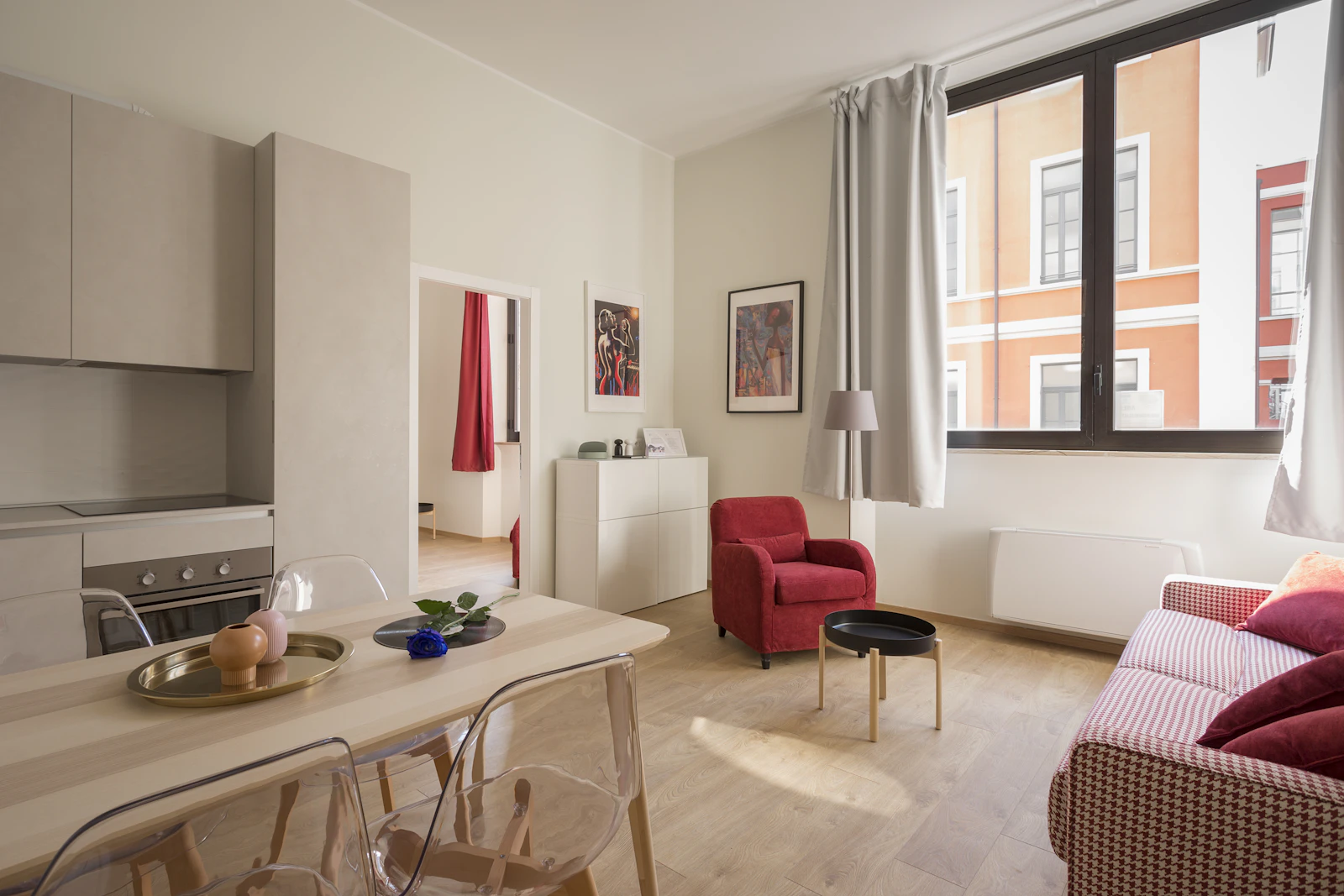
Most luxury windows in Dubai use two or three layers, each doing one job well. Layering is what lets a sea-view living room stay bright but not glaring at noon, private in the evening and fully dark in the bedroom at 6 a.m.
- Sheer layer — closest to the glass, drawn most of the day to cut glare and UV. Our guide to sheer curtains in Dubai covers weaves and colours.
- Main curtain — the decorative layer, usually open as a frame for the window and closed at night for privacy and warmth of the room.
- Blackout — either a blackout lining on the main curtain or a separate blackout roller or Roman blind hidden in the pocket; essential in bedrooms and home cinemas.
- Double tracks — sheer and main curtain on separate, parallel tracks in one ceiling pocket, so each moves independently and nothing is visible.
Plan layering during the renovation, not after: a ceiling pocket deep enough for two tracks and a blind has to be built into the gypsum ceiling, and motor wiring has to be run before the ceiling is closed.
Motorisation for villas and penthouses
On wide and tall windows, motorisation is not a gadget — it protects expensive fabric from being pulled by hand and makes large layered windows practical every day. Quiet tubular and track motors now run on schedules, sun sensors, wall keypads and phone apps, and integrate with smart-home systems so one "evening" scene closes curtains, dims lights and sets the AC.
- Wired motors — the best choice in a renovation: reliable, no batteries, and invisible once the ceiling is closed.
- Battery or rechargeable motors — useful where wiring is impossible, for example in a finished rental apartment; they need periodic charging.
- Automation — sun-tracking schedules close west-facing curtains in the afternoon and lower cooling loads; privacy scenes close ground-floor windows at dusk.
- Quiet operation — in bedrooms, choose low-noise motors and soft-start settings; a cheap motor can undo the luxury feel of the whole room.
More on the options, from single windows to whole villas, is in our guide to motorised curtains in Dubai.
From first measure to installation: the process
A luxury curtain project follows the same order whether it is one bedroom or a whole villa:
- Site visit and brief — measuring every opening, checking ceiling depth for pockets, noting orientation and how each room is used.
- Design and samples — fabric shortlist tried against the room's light, heading style, layering and hardware; large samples, not small swatches, for final decisions.
- Technical measure — a final laser measure once ceilings and floors are finished, because a few millimetres decide whether a curtain hovers or drags.
- Making — cutting, pattern matching, interlining and hand-finishing; typically 2–4 weeks, longer for imported designer fabrics.
- Installation and programming — tracks, motors and curtains fitted, motors programmed and linked to the home system, and folds "trained" so they settle evenly.
- Dressing and aftercare — a final dressing after a few days and guidance on cleaning; most luxury curtains should be professionally cleaned, not machine-washed.
Common mistakes with high-end curtains
The most expensive mistakes are rarely about fabric choice. Skimping on fullness makes a premium fabric look thin. Leaving silk or dark velvet unlined on west-facing glass means replacing it within a few years. Mounting a track on the window frame instead of at ceiling height makes rooms look lower and lets light leak around the edges. Choosing a motor too small for a heavy interlined curtain leads to strain and noise. And mixing too many strong fabrics in one open-plan space fights the architecture instead of framing it — a calm palette of two or three textures usually looks more expensive.
How A5renova makes luxury curtains in Dubai
A5renova designs, makes and installs curtains as part of the whole interior: we measure, sample fabrics in your actual light, plan pockets and wiring with the renovation team and fit motorised tracks that link to your home system. Explore our made-to-measure curtains, interior design and furnishing packages, or book a measure for a quote on your villa or penthouse.
Frequently asked questions
How much do luxury curtains cost in Dubai?+
Indicative 2026 prices for made, lined and installed luxury curtains are about AED 4,000–9,000 for a standard window with premium fabric, AED 9,000–20,000 for wide living-room glazing and AED 15,000–35,000 or more for double-height windows. Motorisation typically adds a significant share per window. Fabric grade, fullness, interlining, height and access are the factors that move the price most.
Which curtain fabric is best for the Dubai climate?+
Linen blends, quality polyester and faux silks, and mid-tone velvets hold up best in strong Dubai sunlight, especially when lined. Pure silk and very dark colours look beautiful but fade quickly on south- and west-facing glass unless they are lined, interlined and protected by a UV-resistant sheer. For bedrooms, a blackout lining or a separate blackout blind is recommended to block early-morning sun completely.
Are motorised curtains worth it in a villa?+
For wide, tall or layered windows, usually yes. Motors protect heavy and expensive fabrics from hand-pulling, make double-height windows usable every day and allow schedules that close west-facing curtains in the afternoon to reduce cooling loads. In a renovation, wired motors are the most reliable choice because cables can be hidden in the ceiling. They can also be integrated into smart-home scenes with lighting and AC.
How do you layer curtains for privacy and blackout?+
The usual luxury setup has a sheer closest to the glass for daytime glare and privacy, a decorative main curtain in front for evening privacy and warmth, and either a blackout lining on the main curtain or a hidden blackout blind for full darkness. Sheer and main curtain run on parallel tracks in a ceiling pocket so each opens independently. The pocket must be planned before the ceiling is finished.
How long does it take to make luxury curtains in Dubai?+
After the final technical measure, making usually takes two to four weeks for fabrics held locally. Imported designer fabrics can add several weeks of lead time. Installation of a single room takes a few hours; a full villa with motorised tracks, programming and dressing may take several days. Planning curtains during the renovation, rather than after, avoids waiting on finished ceilings and keeps the move-in date intact.
How should luxury curtains be cleaned?+
Most lined and interlined curtains, especially silk, velvet and wool, should be professionally dry-cleaned or cleaned on site rather than machine-washed, because shrinkage and water marks are common. Regular gentle vacuuming with a soft brush attachment removes Dubai dust between cleans. Sheers in performance polyester are often washable, but check the fabric label first. Keeping motors and tracks dust-free also keeps them quiet over time.
Related services